
Wombat Room: Toddlers 2 — 3 Years
The toddler years are magical—and challenging. Your child is becoming their own person, eager to explore, testing boundaries and learning to navigate social relationships. In our Wombat Room, we celebrate this developmental moment, providing the right balance of support and freedom so your toddler can develop confidence, independence and emerging social skills.
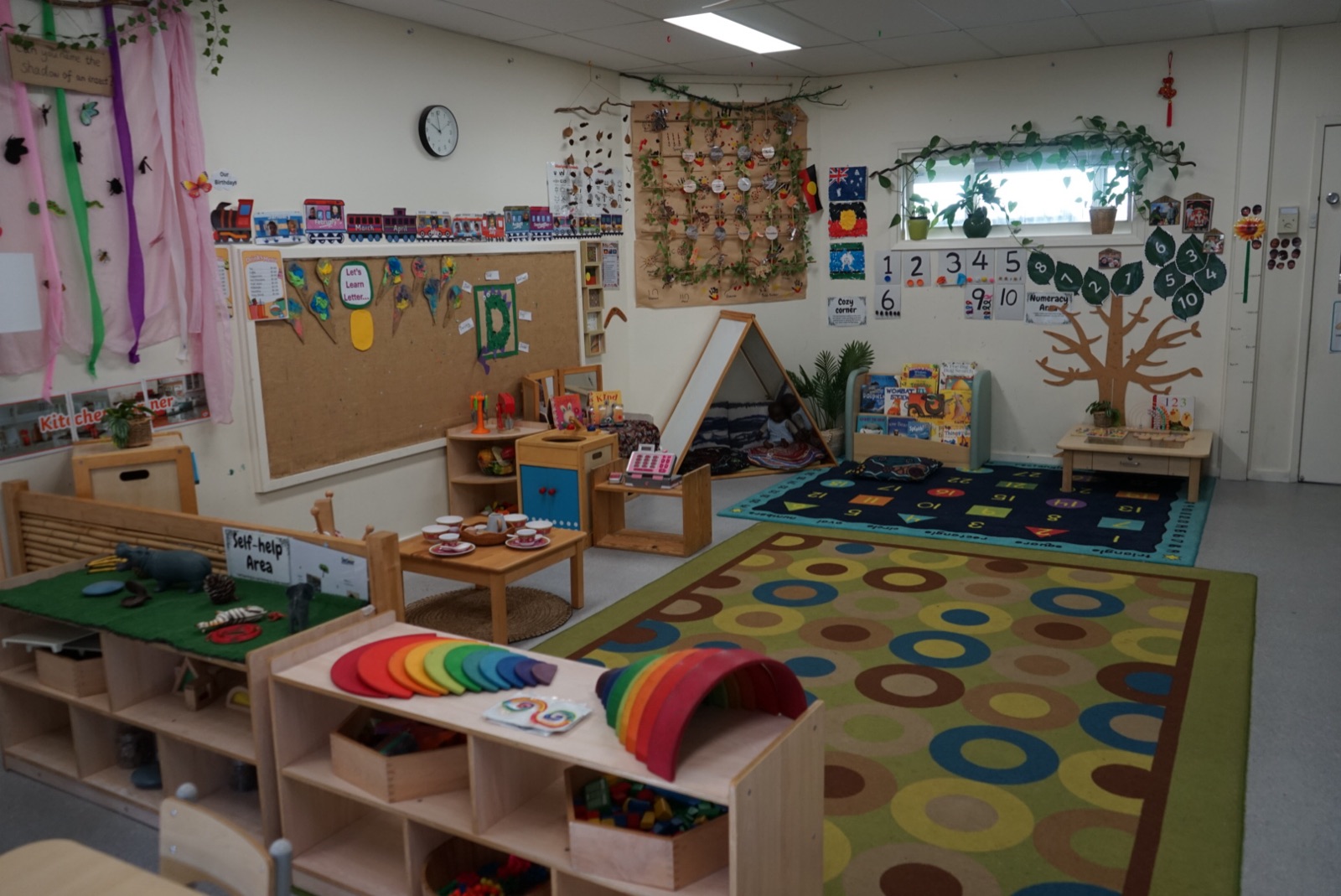
The Wombat Room Philosophy
Toddlers are little scientists and adventurers. They need:
- Safe spaces to test boundaries and develop autonomy
- Consistent, patient guidance as they learn self-regulation
- Opportunities for messy, hands-on play where real learning happens
- Peer relationships that support early social development
- Celebration of effort and emerging skills, not just achievement
We’re here to guide, not control—to encourage independence while keeping everyone safe.
A Typical Day in the Wombat Room
7:15–9:00am
Arrival & Greeting — Your toddler arrives with a warm welcome. We do a quick handover about sleep, mood and any notes from home.
9:00–9:30am
Morning Tea — We offer fresh fruit, toast, milk, smoothies, hash browns and many more!
9:30–11:15am
Structured Play & Learning (incl. Outdoor Play) — Educators set up play experiences—painting, block building, dramatic play, sensory activities—that invite exploration. Children choose what interests them, and educators join their play.
11:15am–12:00pm
Transition & Lunch — Fresh food cooked on site using healthy ingredients — such as spaghetti bolognaise, beef noodle soup, pizza and pumpkin soup. All meals come with a side of vegetable sticks to ensure dental hygiene. This is followed by a calm period as children settle for Sleep Time.
12:00–2:30pm
Rest Time — While some toddlers nap, others enjoy quiet activities—stories, puzzles, quiet play. We respect each child’s rest needs.
2:30–3:15pm
Afternoon Tea — Healthy snacks like fresh fruits, yogurt, muffins, sandwiches, ice cream and so much more! All food is cooked on site using healthy ingredients.
3:15–5:00pm
Play & Learning — Educators facilitate play, run small group activities, and follow children’s interests. This might be music, art, building, imaginative play or outdoor exploration.
5:00–6:15pm
Winding Down, Pick Up & Late Snacks — Throughout the afternoon, children continue to engage in a range of indoor and outdoor learning experiences based on their interests, choices and individual needs. Late afternoon snack is offered to children. As families arrive for pick-up, educators share important information about the child’s day, including their experiences, learning, wellbeing, meals, rest and any significant moments.
What Makes the Wombat Room Special
🎨 Learning Through Play
We don’t use worksheets or forced learning activities. Instead, we create rich play environments and follow your child’s interests. A child building with blocks is learning maths, physics and problem-solving. That’s real learning.
💪 Supporting Independence
We give toddlers real choices and opportunities to do things themselves—pouring water, washing hands, choosing activities. Mistakes happen, and that’s where learning lives.
👫 Early Social Skills
Toddlers are learning to play together, share (sometimes!) and navigate friendships. We facilitate these connections and help children manage big feelings as they arise.
📋 Structured Yet Flexible
We have routines and rhythm that help toddlers feel secure, but we’re responsive to what children need on any given day. Some days call for more active play; others need extra quiet time.
🎵 Art, Music & Movement
Regular incursions bring new experiences—visiting musicians, sports sessions, cultural visitors. Plus daily singing, dancing and creative expression.
📝 Individual Learning Plans
Every child at MACC has their own individual learning plan, tailored to their unique interests, strengths and developmental goals. Our educators observe, document and plan experiences that support each child’s growth and learning journey.
What Your Child Will Experience
- Confidence building. Being trusted to try new things, fail safely and try again.
- Independence emerging. Doing things themselves with gentle guidance.
- Social connection. Friendships forming, learning to play and interact with peers.
- Creative expression. Art, music, movement, imaginative play without limits.
- Learning from play. Real skills developing naturally through exploration and curiosity.
Ready to Explore the Wombat Room?
Your toddler will thrive in an environment designed for their unique developmental stage. Let’s chat about how we support two- and three-year-olds.